
Career
How to get your resume past the ATS (and in front of a human)
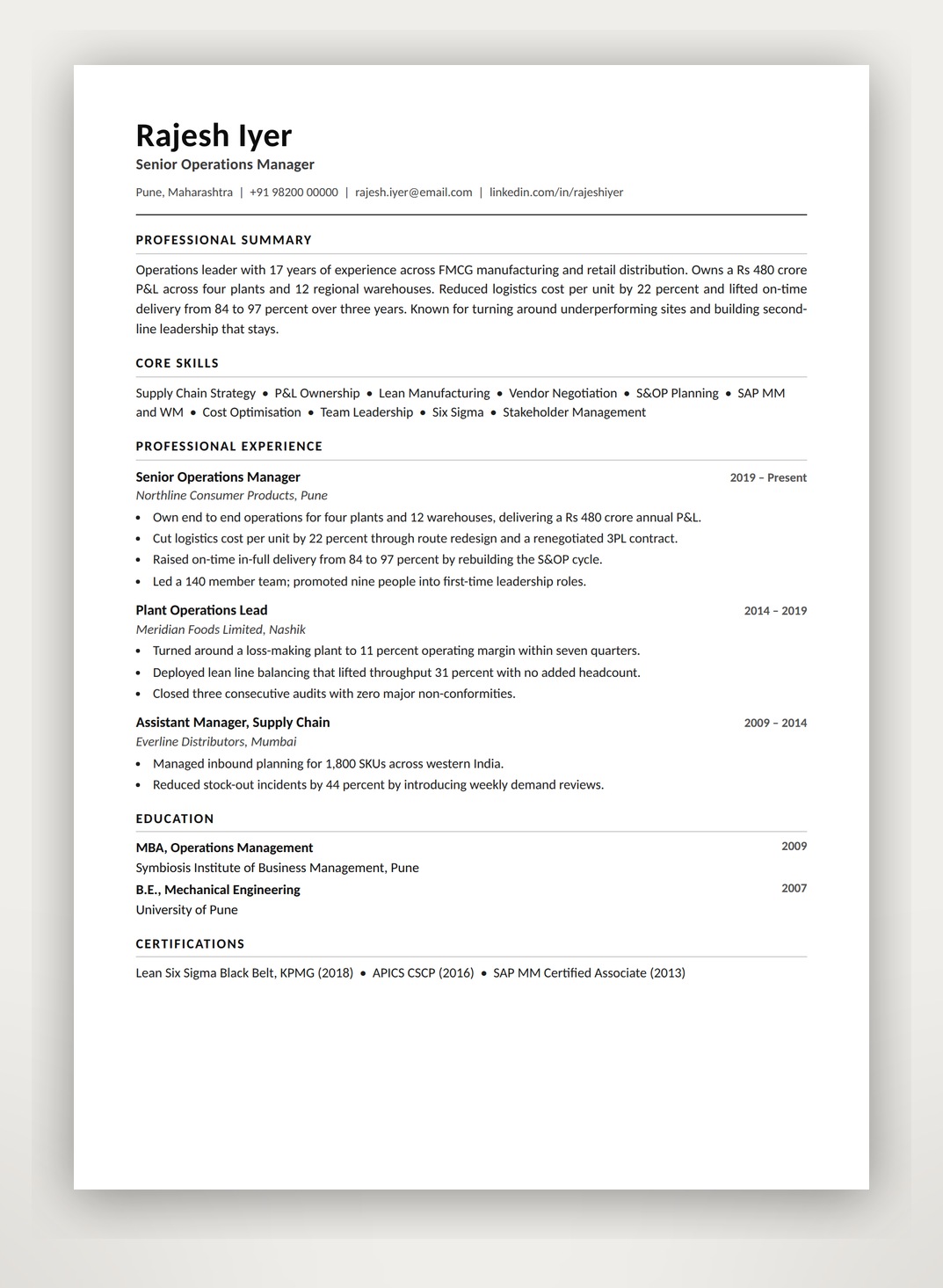
If you have been sending out applications and hearing nothing back, it is tempting to assume your experience is the problem. Often it is not. The more likely culprit is a piece of software that read your resume before any human did, could not make sense of it, and quietly set it aside.
That software is called an applicant tracking system, or ATS. Most medium and large employers use one. Understanding how it reads your resume is the difference between landing in a recruiter's shortlist and disappearing into a database nobody opens.
What an ATS actually does
An ATS is not judging your career. It is parsing text. It scans your resume, tries to sort the content into fields it understands (name, contact, work history, skills, education), and stores the result so a recruiter can search it later. When a role opens, recruiters search that database using keywords. If your resume was parsed cleanly and contains the right terms, you surface. If it was not, you do not, no matter how strong your experience is.
The failures are usually mechanical. A two-column layout gets read left to right, scrambling your history into nonsense. A skill hidden inside a graphic is invisible, because the parser cannot read images. A job title placed in a header or text box vanishes entirely. None of these are judgements about you. They are formatting choices the software could not handle.
Write for the parser first
The fix is not to make your resume ugly. It is to make it legible to a machine while still reading well to a person. A few principles carry most of the weight.
Use a single column. Columns are the most common reason a resume parses badly, because the software reads across the page rather than down each column. A clean single-column layout removes the risk entirely.
Use standard section headings. "Work Experience," "Education," "Skills." Clever alternatives like "Where I have made an impact" may read nicely, but the parser is looking for the conventional labels to sort your content correctly.
Put text in the body, never in headers, footers, text boxes, or images. Many systems ignore those regions completely. If it matters, it belongs in the main body as real, selectable text.
Mirror the language of the job description. If the posting asks for "stakeholder management" and you wrote "managing relationships," add the exact phrase. This is not keyword stuffing. It is making sure the term a recruiter searches for actually appears where it is true.
Do not forget the human
Clearing the ATS only gets you halfway. Once you surface in a search, a person reads you next, and they decide in seconds. So the same resume has to do two jobs: parse cleanly for the software and land sharply for the human. That means strong, specific achievements near the top, numbers where you have them, and no wasted lines.
The good news is that these two goals rarely conflict. A clean, single-column, plainly-labelled resume full of specific, well-worded accomplishments is exactly what both the machine and the recruiter want. Get that right and you stop losing opportunities you were always qualified for.
The takeaway
A quiet resume is usually a formatting problem, not an experience problem. Build for the parser, write for the person, and the applications that were vanishing start turning into conversations.