Five typos that quietly cost businesses real money
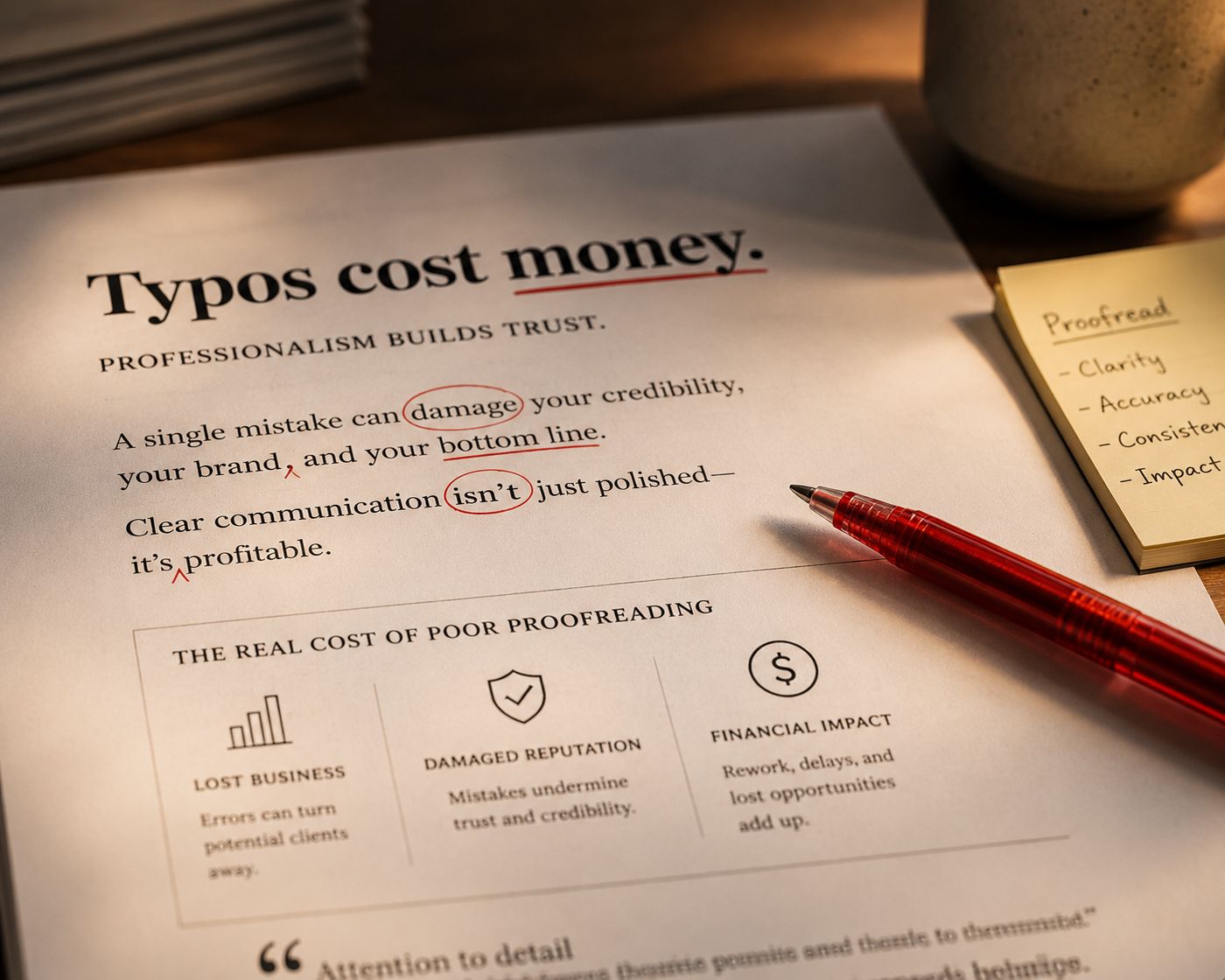
It is easy to think of proofreading as a finishing nicety, the polish you add if there is time. In reality, errors in public-facing text do measurable damage: lost sales, lost trust, sometimes lost contracts. The cruel part is that the writer almost never sees them, because the brain reads what it expects to read.
Here are five kinds of mistakes that look small and cost more than they should.
1. The confident wrong word
Spellcheck cannot save you from a correctly spelled wrong word. "We are now excepting new clients" passes every automated check and quietly tells the reader you did not look twice. These are the most dangerous errors precisely because software waves them through.
2. The price with a missing zero
In numbers, a typo is not embarrassing, it is expensive. A product listed at the wrong price, an invoice with a transposed figure, a proposal that understates a quote: each can cost real money or force an awkward correction that undercuts your credibility.
3. The wrong name
Misspelling a client's name, or their company, in the very first line of an email is a small error with an outsized effect. It signals carelessness at exactly the moment you are trying to signal the opposite. In a pitch, it can be the detail that loses you the room.
4. The broken link and the leftover placeholder
"Insert testimonial here" left live on a published page. A call-to-action button that leads nowhere. These are not language errors, but a proofreader's eye catches them, and they erode trust just as quickly, because they suggest nobody checked the final result.
5. The tone that slips
Sometimes the error is not a mistake at all, just the wrong register: a flippant line in a serious message, or stiff formality where warmth was needed. Catching tone is the subtler half of proofreading, and often the half that protects a relationship.
The takeaway
Proofreading is not about pedantry. It is about protecting the impression your words make on the people who matter. A second careful pair of eyes is one of the cheapest forms of insurance a business can buy, and one of the most quietly valuable.