Why your website's first five seconds decide everything
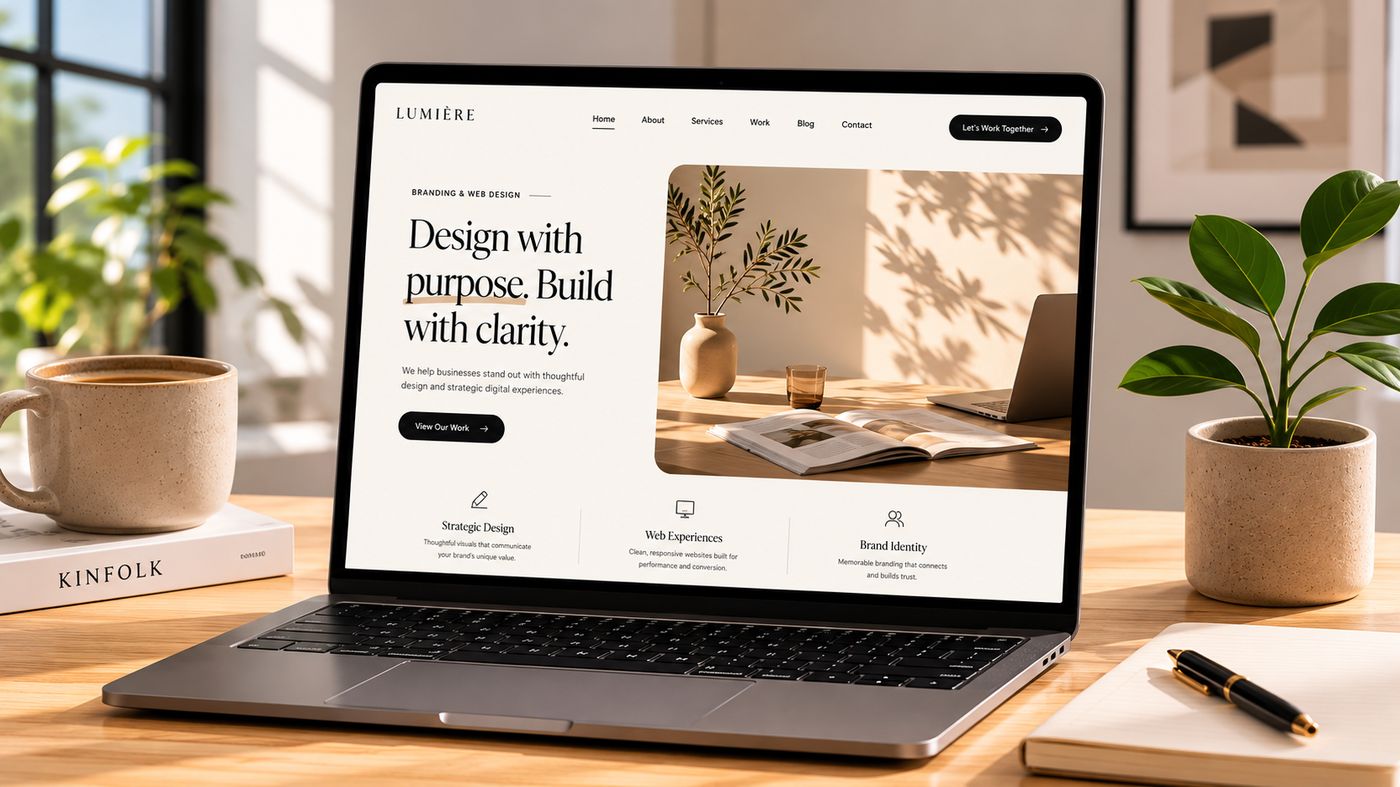
There is a quiet, slightly uncomfortable truth about websites: most people decide whether to stay or leave before they have read a single sentence. Studies have put the number at around fifty milliseconds, faster than a conscious thought. By the time a visitor knows what your business does, they have already formed a feeling about whether it looks trustworthy.
That feeling is not about logos or clever copy. It is about visual clarity. A clean layout, generous space, and a confident headline tell the brain "this is run by people who care." A cluttered page with five competing messages says the opposite, no matter how good the underlying business is.
What those first seconds are really measuring
When someone lands on a page, they are unconsciously asking three questions. Am I in the right place? Is this for someone like me? Can I trust it? A strong hero section answers all three at once: a headline that names the value, a single clear action, and a visual that sets the tone.
Notice what is missing from that list: your company history, your full service menu, your awards. Those matter, but later. In the first five seconds they are noise. The job of the top of your page is not to tell your whole story. It is to earn the next ten seconds.
The three habits of pages that hold attention
First, one message per screen. Resist the urge to say everything immediately. A page that asks the eye to choose between six things is a page the eye leaves. Second, real hierarchy. The most important thing should look the most important, larger, bolder, with room to breathe. Third, speed. A beautiful page that loads slowly has already lost. Performance is part of design, not separate from it.
None of this requires flashy animation or trend-chasing. The most premium-feeling websites are usually the calmest ones. They trust a single idea, present it cleanly, and let quality do the talking.
The takeaway
Your website does not get a second chance at a first impression, and that impression is mostly visual. Before you write another line of copy, ask the harder question: in the first five seconds, what does my page make a stranger feel? Get that right, and everything else has room to work.